
Roofs That Tell the Real Story After a Storm
Storm and hail damage inspections in Wimberley for roofs that need documentation and clarity after impact
Many older homes in Wimberley and across the Hill Country were roofed during different building eras, some with asphalt shingles laid in the 1990s and early 2000s, others with metal panels added more recently as replacements. Western Skies Roofing & Construction inspects hail and storm damage on both materials in Wimberley and surrounding Hill Country communities, where the differences in impact patterns matter for determining what actually needs repair. Hail that dents metal panels leaves round impressions you can photograph from ground level, while shingle damage often hides under the granule layer until someone walks the roof and checks each slope in direct light.
Hail in the Hill Country tends to hit in spring and fall, and damage on metal and shingle roofs looks different, so the on-roof check and the photos taken during that check matter for separating real impact from normal wear that accumulated over years of sun exposure. Metal roofing shows denting that does not always compromise the panel but changes its appearance, while shingles lose granules in distinct patterns where hailstones struck, often in clusters that match storm direction and intensity.
Schedule a roof inspection to document storm impact with photographs taken on site.
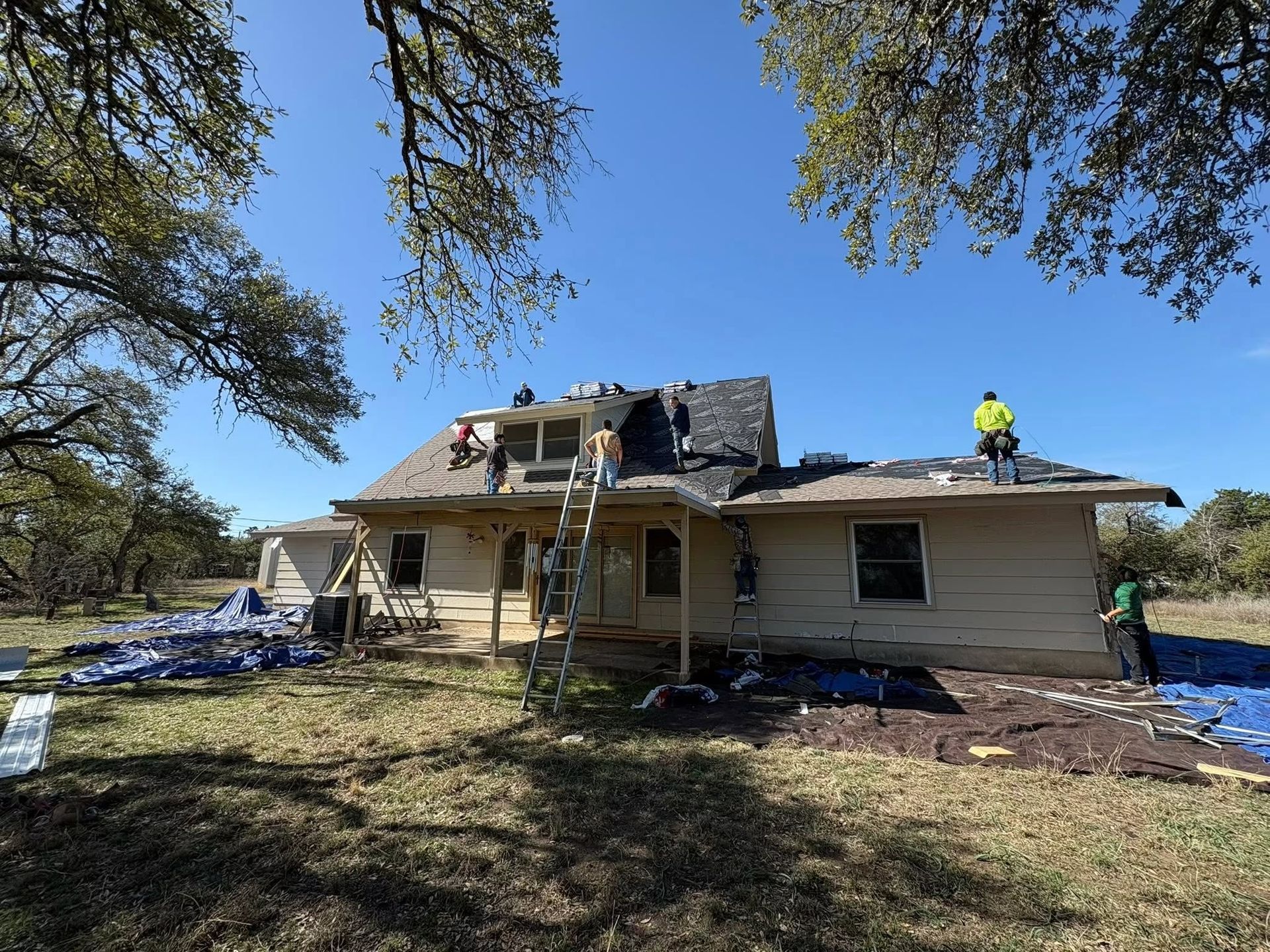
The owner of Western Skies performs each inspection personally, walking every slope and photographing each area where damage appears. If there is no damage, he says so; if impact is present, he photographs each location and walks you through the images so you see exactly where hail struck, how the material responded, and whether the damage requires repair or replacement.
After the inspection, you receive photos showing the specific areas affected, which become the basis for insurance claims or repair decisions. Shingle roofs may show bruising where the mat underneath compressed, granule loss in defined circles, or cracked tabs where larger stones hit at high velocity. Metal roofs display round dents that catch light at certain angles, and those dents are documented with close-up images that show depth and distribution.
The inspection also notes any pre-existing wear—lifting edges from age, previous repairs that no longer seal properly, or fasteners that have backed out over time—so you have a complete picture of what the storm caused versus what was already present. This distinction matters when filing claims and when deciding which repairs address storm damage and which address deferred maintenance.
Questions Homeowners Ask Before the Inspection
Roof inspections after hail events raise specific questions about what can be documented, what the photos will show, and how damage is identified on different materials common across Wimberley and the Hill Country.
What does hail damage look like on a metal roof compared to shingles?
Metal roofing shows round dents that remain visible under direct light, while shingles lose granules in circular patterns or develop cracks and bruises in the underlying mat where stones struck with force.
How is the inspection performed on a steep or multi-level roof?
The inspector walks each slope directly, using fall protection when necessary, and photographs damage from multiple angles so every affected area is documented even on complex roof lines.
What happens if no damage is found during the inspection?
If the roof shows no hail impact or storm damage, the inspector states that clearly and provides an explanation of what was checked, so you have a documented record that the roof was evaluated and found intact.
How soon after a storm should the roof be inspected?
Inspections should occur after the weather clears but before repairs begin elsewhere on the property, so the roof condition is documented while the storm event is still recent and other damage in the area corroborates timing.
What will the photos show that helps with an insurance claim?
Photos capture the size, depth, and distribution of dents or granule loss, and they include reference points like vents or flashing so the insurer can see exactly where on the roof the damage occurred and verify it matches the reported storm pattern.
Western Skies Roofing & Construction also inspects storm and hail damage in Dripping Springs, San Antonio, New Braunfels, Fredericksburg, and Canyon Lake. Inspections are provided at no charge, and the owner conducts each evaluation personally with photo documentation supplied after the visit.