
Walls That Shed Water Correctly
Siding installation and repair in Wimberley for homes with felt, Tyvek, or OSB decking behind the panels
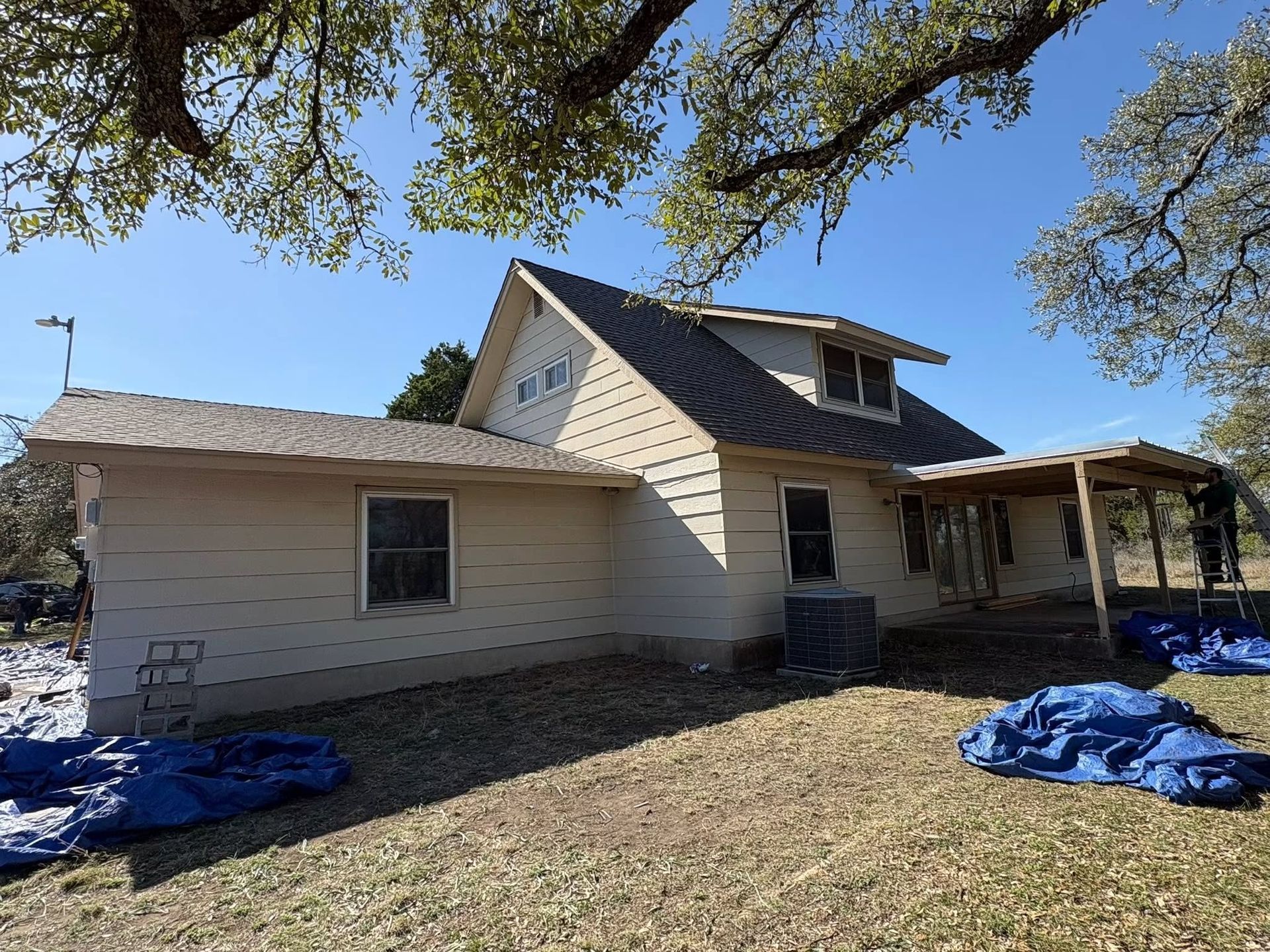
When siding is coming off, the crew checks what is behind it before new panels go up. Older Hill Country homes often have felt or Tyvek behind the siding, while newer builds usually have OSB decking under a tie-back, and each needs a different check before replacement. Western Skies Roofing & Construction handles siding installation and repair in Wimberley by evaluating the substrate first, then selecting the fastening and flashing method that works with what is already there.
On older homes, felt or Tyvek acts as the weather barrier, and the siding is the outer layer that sheds bulk water. If the barrier is torn or missing, it gets replaced before new siding is fastened. On newer builds, OSB sheathing provides structural support and a nailing surface, and the house wrap ties back to window and door frames to direct water outward. The crew verifies that the substrate is sound, dry, and properly sealed before any panel work begins.
Arrange an on-site evaluation to determine what is behind your existing siding and what needs to be addressed before installation.
Siding panels are installed from the bottom up, with each course overlapping the one below to direct water down and away from the wall. Flashing is placed above windows and doors, and corners are sealed to prevent water from entering at joints. Fasteners are driven into the substrate at the manufacturer's specified intervals, and panels are left with enough clearance to expand and contract without buckling.
Once the siding is in place, the exterior walls shed rain without allowing water to reach the house wrap or sheathing underneath. You will notice that seams are tight, corners are sealed, and panels sit flat against the wall without gaps or waves. The siding protects the structure from moisture intrusion, and the interior walls stay dry during wind-driven rain.
Free estimates are provided before any work is scheduled. Full installation is included—covering any necessary painting or staining, as well as replacing or modifying trim around windows and doors to fit your new siding profile.
Common Questions About This Service
Siding questions in Wimberley and Dripping Springs typically focus on what happens during installation, how the substrate is prepared, and what changes after the work is finished.
What happens if the house wrap is damaged when old siding is removed?
The damaged section is cut out and replaced with new house wrap, and the seams are taped to restore the continuous weather barrier before new siding panels are fastened over it.
How is siding fastened to OSB versus felt-backed walls?
On OSB sheathing, fasteners are driven directly into the decking at stud locations for structural support, while on felt-backed walls, fasteners must reach the studs behind the felt because the felt itself provides no holding power.
Why do older homes in Wimberley often have felt instead of house wrap?
Felt was the standard weather barrier before synthetic house wraps became common in the 1980s, and many Hill Country homes built before that time still have the original felt, which can remain functional if it was installed correctly and has not been torn or saturated.
What should you check after new siding is installed?
Walk the perimeter and verify that all seams are tight, that flashing is visible above windows and doors, that corner trim is sealed, and that no panels are warped or buckled, which would indicate improper fastening or insufficient clearance for expansion.
When should siding be repaired instead of replaced?
If only a few panels are damaged and the substrate and house wrap are intact, targeted repair restores function without the expense of removing and replacing the entire wall, though mismatched panel styles or discontinued colors may make full replacement the better long-term option.
Western Skies Roofing & Construction also provides siding installation and repair in Dripping Springs, San Antonio, New Braunfels, Fredericksburg, and Canyon Lake. Call (512) 906-9671 to schedule an inspection and receive a detailed estimate based on your substrate condition and material choice.