
New Panels Over Sound Structure
Siding Installation in Johnson City for older Hill Country homes with felt or Tyvek behind the walls
Homes built across Johnson City and the Hill Country over the past several decades often have felt or Tyvek as the weather barrier behind the siding, and the condition of that layer determines whether new panels can be installed directly or whether the underlayment needs attention first. Western Skies Roofing & Construction installs siding on homes in Johnson City, Wimberley, Marble Falls and Burnet by checking what is behind the existing panels before new material goes on. You are shown the condition behind the wall before the new siding is set, and the crew explains whether the underlayment can stay or needs to be replaced.
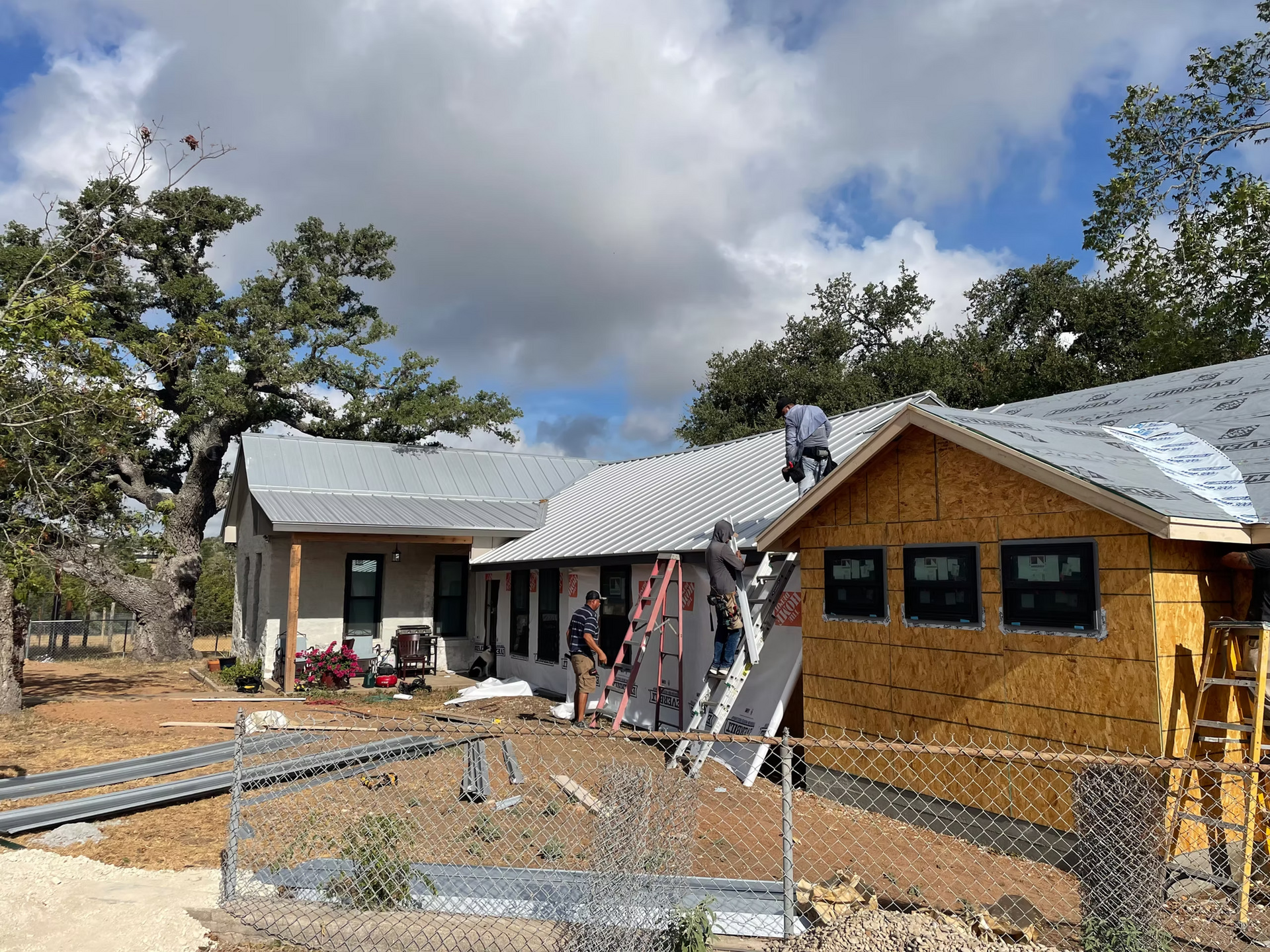
On older homes the crew removes a section of siding to assess the felt or Tyvek underneath, looking for tears, moisture damage or areas where the barrier has pulled away from the sheathing. On newer builds with OSB decking and a tie-back system, the crew confirms that the structure is sound and that the tie-back is intact before installing new panels. The underlayment is repaired or replaced if it cannot perform as a weather barrier, and fasteners are selected based on the type of sheathing and the weight of the new siding material.
Arrange an on-site consultation to review the condition of your underlayment and plan the siding installation.
The work begins with an inspection of the existing siding and the structure behind it, because panels installed over damaged sheathing or compromised underlayment will fail prematurely regardless of the quality of the new material. The crew checks for rot, water staining or soft spots in the sheathing, and repairs any section that cannot hold fasteners securely. On older Hill Country homes where felt was standard, the barrier is evaluated for integrity and replaced if it no longer sheds water or if it has torn along seams or fastener points.
Once the siding is installed, the exterior is weathertight, panels are aligned and fastened without gaps, and the underlayment behind the wall remains intact and functional. The home no longer shows signs of moisture intrusion around windows or at the foundation line, and the new siding sits flat without buckling or pulling at the seams. Western Skies Roofing & Construction completes the installation with the owner supervising the work, so any structural issues discovered during removal of the old panels are addressed before the new material is fastened.
The installation includes removal of old siding, inspection and repair of sheathing and underlayment, installation of new panels, flashing around windows and doors, and fastening to resist wind load. Cleanup of old materials and construction debris is completed before the project is closed, and the site is cleared before the crew leaves.
What Property Owners Ask About the Installation
Homeowners in Johnson City and Marble Falls often want to know what happens during the installation, particularly when the house was built decades ago and the structure behind the siding has not been inspected recently.
What does the crew check behind the siding before installing new panels?
The crew inspects the sheathing and underlayment for moisture damage, rot or tears, and assesses whether the barrier can continue to shed water or whether it needs to be replaced before the new siding is fastened.
How is the underlayment replaced on an older Hill Country home?
The old siding is removed, the damaged felt or Tyvek is stripped away, and new weather barrier is installed over the sheathing before the new panels are fastened, with seams overlapped and sealed to prevent water intrusion.
What happens if the sheathing is damaged during the siding removal?
Damaged sheathing is cut out and replaced with new material that matches the thickness and fastening pattern of the surrounding structure, so that the new siding sits flat and fasteners hold securely across the entire wall.
How are new panels fastened to homes with OSB decking?
Fasteners are driven through the panel and into the OSB at the manufacturer-specified spacing, with the tie-back system verified before installation to confirm that the decking is stable and that the new siding will be anchored properly.
What should you check after the siding is installed?
You should verify that panels are aligned without gaps or buckling, that flashing around windows and doors is sealed, that fasteners are flush and evenly spaced, and that the site is cleared of old materials and debris before the crew marks the project complete.
Western Skies Roofing & Construction also installs siding in Dripping Springs, San Antonio, New Braunfels, Fredericksburg and Canyon Lake. Free estimates are provided for every siding installation, with the crew explaining the condition behind the existing panels and the work required before new material is installed.