
Leaks That Stop Where They Start
Roof repair in Wimberley for shingle and metal roofs leaking at flashing, valleys, and penetrations
Hill Country homes often have a shingle roof and a metal roof on the same street, and each leaks in its own way at flashing, valleys, and penetrations. Western Skies Roofing & Construction repairs both roof types in Wimberley by finding the actual entry point before any work begins. The repair targets the source of the leak rather than the visible stain on the ceiling, which can be several feet away from where water first enters.
The work begins with isolating where the water enters, not where it shows up inside. Flashing around chimneys and vent pipes often fails first because sealant dries out or metal loosens, and valleys concentrate runoff in one channel where seams can separate. On metal roofs, fasteners back out over time, and on shingle roofs, the shingles themselves can lift or crack, but the leak always travels downslope before it drips into the attic.
Schedule a roof inspection to identify the entry point and the extent of the damage.
Once the entry point is located, the repair replaces or reseals the component that failed. That might mean new step flashing where the roof meets a wall, a resealed pipe boot, or new underlayment and shingles in a valley that has separated. Metal roof repairs often involve replacing fasteners with larger diameter screws and adding sealant where panels overlap.
After the repair is complete, the roof sheds water the way it was designed to, without detours into the structure. You will not see new stains spreading on the ceiling, and the attic insulation stays dry during the next rain. The visible damage inside may remain until you repaint or replace drywall, but the active leak stops.
The repair does not extend the overall lifespan of an aging roof, but it does stop the specific failure that is letting water in. If surrounding shingles or flashing are also deteriorating, those are noted during the inspection so you can decide whether to address them now or later.
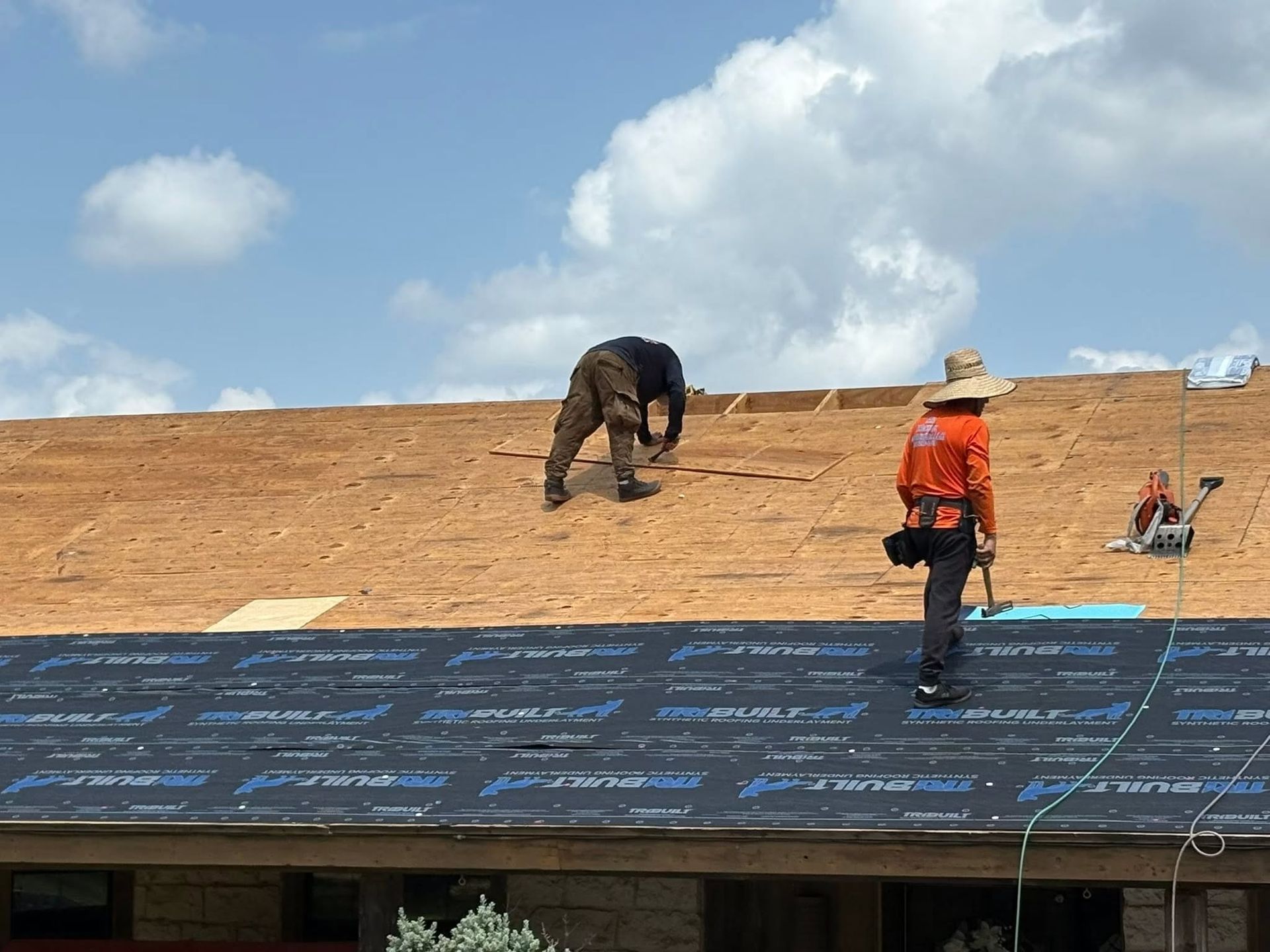
What Property Owners Ask About the Work
Roof repair questions in Wimberley and Dripping Springs usually focus on what the work involves, what gets replaced, and how long the fix lasts once the leak is stopped.
What happens during a roof leak inspection?
The inspector walks the roof to locate the failure point, checking flashing, valleys, and penetrations first, then examines the attic from inside to trace the water path and confirm the entry point.
How is a valley leak different from a shingle leak?
Valley leaks occur where two roof planes meet and water concentrates in one channel, which puts more stress on seams and underlayment, while shingle leaks happen when individual shingles crack or lift and allow water to reach the decking underneath.
Why do metal roofs leak at fasteners?
Fasteners expand and contract with temperature changes, and over time they can back out slightly or the rubber washer can harden, creating a gap where water enters during wind-driven rain.
What should you check after a roof repair is finished?
Walk the attic after the next significant rain and verify that no new moisture appears at the repair location, and check that the ceiling stain is not growing or darkening.
When does a repair make more sense than replacement?
If the surrounding roof material is still in good condition and only one component has failed, a targeted repair restores function without the cost or disruption of tearing off and replacing the entire roof.
Western Skies Roofing & Construction also provides roof repair in Dripping Springs, San Antonio, New Braunfels, Fredericksburg, and Canyon Lake. Call (512) 906-9671 to arrange an inspection and receive a detailed explanation of what needs to be repaired and why.